
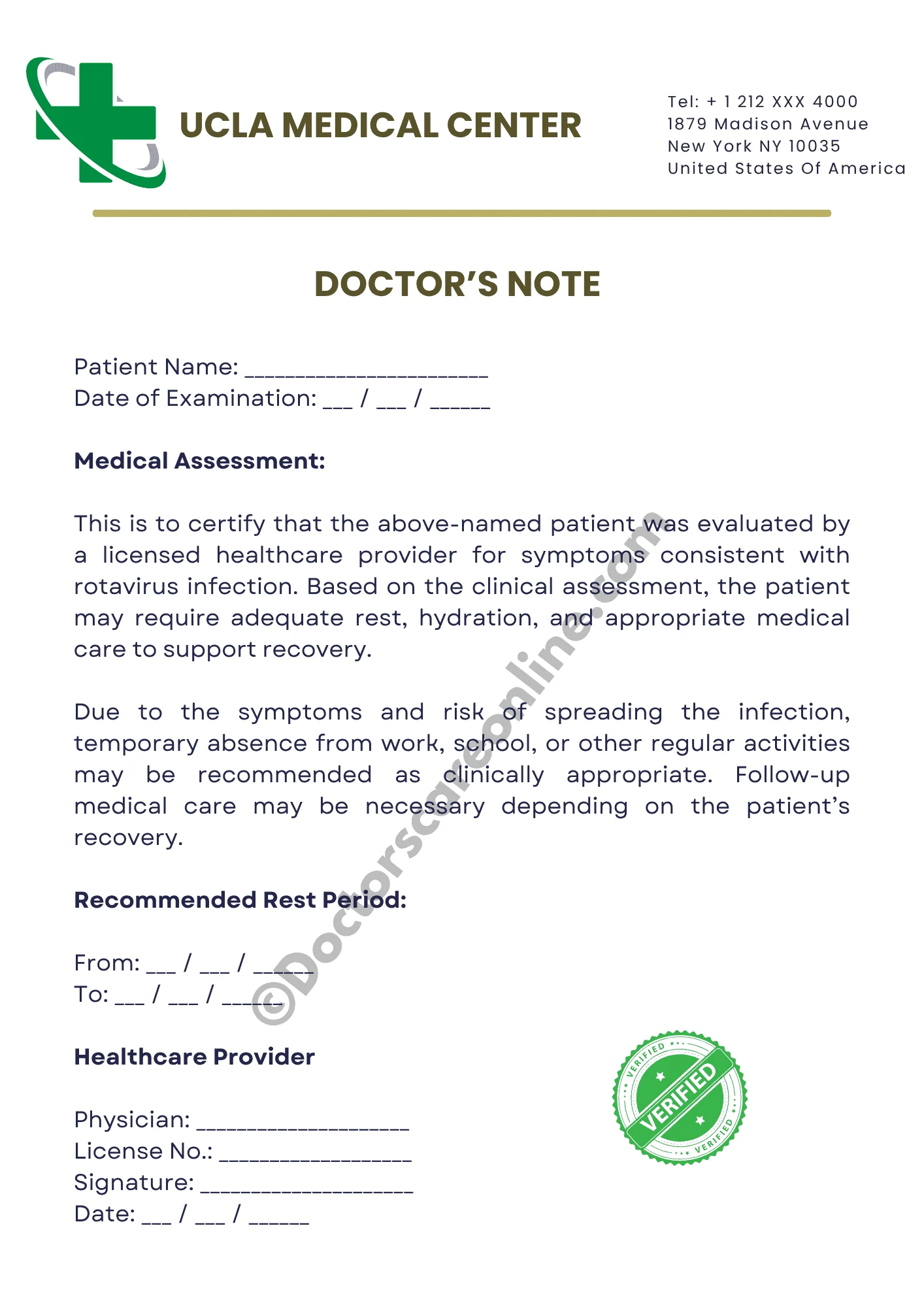
A doctor’s note for rotavirus is medical documentation that may confirm that a patient was evaluated by a healthcare provider and, when clinically appropriate, may recommend temporary absence from work, school, daycare, or other activities.
Rotavirus is a contagious viral infection that commonly causes vomiting, watery diarrhea, stomach pain, fever, and loss of appetite. Although rotavirus is especially common in infants and young children, older children and adults can also become infected. The illness can sometimes make it difficult to attend work, school, daycare, travel, or complete normal daily responsibilities.
A doctor’s note for rotavirus is not simply a document requested or purchased without medical assessment. A legitimate medical note should be based on a healthcare professional’s evaluation and clinical judgment.
Related Doctor Note :——
You can also visit:
- Doctors Note for Limited Work
- Doctor’s Note for Injury
- Doctors Note for Plantar Fasciitis
- Doctor’s Note for Work From Home
- Unlimited Doctor’s Notes for 1 Year
Why Might Someone Need a Doctor’s Note for Rotavirus?
Rotavirus can cause symptoms that interfere with normal responsibilities. Vomiting and diarrhea can also increase the risk of dehydration, particularly in young children.
A person may need medical documentation when:
- An employer requires proof of a medically related absence.
- A school or college requests documentation for missed classes.
- A daycare requires information concerning an illness-related absence.
- Symptoms make it difficult to safely perform normal job duties.
- A healthcare provider recommends staying home while recovering.
- A patient needs temporary activity restrictions.
- An organization requires documentation before a person returns to regular activities.
The need for a doctor’s note depends on the rules of the employer, school, daycare, or other organization.
Rotavirus Symptoms That May Affect Work or School
Rotavirus symptoms can vary from person to person. According to the CDC, common symptoms include vomiting, watery diarrhea, fever, stomach pain, loss of appetite, and dehydration. Symptoms commonly begin about two days after exposure, and vomiting and watery diarrhea may last approximately three to eight days.
Symptoms that may make normal activities difficult include:
- Frequent watery diarrhea
- Repeated vomiting
- Abdominal discomfort or stomach cramps
- Fever
- Weakness or fatigue
- Reduced appetite
- Difficulty maintaining adequate fluid intake
- Signs of dehydration
For children, symptoms may interfere with school or daycare attendance. For adults, frequent bathroom use, weakness, vomiting, or dehydration may make working particularly difficult.
How Rotavirus Can Affect Daily Activities
Rotavirus may temporarily affect a person’s ability to maintain normal routines.
At Work
Symptoms may make it difficult to:
- Remain at a workstation for an extended period
- Travel to and from work
- Perform physically demanding duties
- Maintain normal productivity
- Work safely when experiencing weakness or dizziness
- Access a restroom frequently enough when diarrhea is severe
At School or College
Students may have difficulty:
- Attending classes
- Completing assignments
- Taking examinations
- Participating in physical activities
- Remaining in class because of vomiting or diarrhea
At Home
- More severe symptoms may also make routine activities such as preparing food, caring for others, or traveling difficult.
When Should You Consider an Online Doctor Appointment?
An online medical appointment may be useful when symptoms need professional assessment but do not appear to require immediate emergency care.
A telehealth consultation may allow you to discuss:
- When your symptoms began
- Frequency of vomiting or diarrhea
- Fever and other symptoms
- Fluid intake
- Urination changes
- Existing medical conditions
- Current medications
- Whether symptoms are improving or worsening
- The effect of illness on work, school, or other responsibilities
Telehealth is not appropriate for every medical situation. A healthcare provider may recommend an in-person evaluation when a physical examination, testing, or urgent treatment is necessary.
How to Book an Online Doctor Appointment for Rotavirus
Booking an online appointment can help you discuss your symptoms with a healthcare professional from a convenient location.
Step-by-Step Process
- Choose an online healthcare service
Select a service that provides access to licensed healthcare professionals in the appropriate U.S. location. - Create an account or log in
Enter the requested account and patient information. - Select an appointment
Choose an available date and time that works for you. - Provide basic health information
Describe your symptoms, when they started, and any relevant medical history. - Complete payment when required
Follow the payment instructions displayed during the booking process. - Attend the appointment
Join the online consultation using the instructions provided by the service. - Discuss your documentation needs
Tell the healthcare provider if you need documentation for work, school, daycare, or another legitimate purpose. - Follow the provider’s decision
If medical documentation is clinically appropriate, the healthcare provider determines what information and recommendations should be included.
Telehealth appointments should be treated similarly to in-person medical visits, and patients should use a private location and reliable technology when possible.
What Information Should You Have Ready for Your Appointment?
Preparing relevant information can make your online consultation more useful.
Before the appointment, consider having:
- Date and approximate time when symptoms began
- Number of vomiting episodes
- Frequency of diarrhea
- Presence and severity of fever
- Abdominal pain or cramping
- Ability to drink and keep fluids down
- Changes in urination
- Current medications
- Medication allergies
- Existing health conditions
- Recent exposure to someone with gastrointestinal illness
- Recent travel or other relevant circumstances
- Work or school responsibilities affected by the illness
For a child, a parent or caregiver should be prepared to describe the child’s symptoms, fluid intake, behavior, urination, and other relevant changes.
How Is Rotavirus Diagnosed?
Rotavirus may be suspected based on symptoms and the patient’s medical history. In certain circumstances, laboratory testing of a stool sample may be used to detect rotavirus. The CDC notes that PCR and antigen-detection tests can identify rotavirus, although such testing is not required for every illness.
A healthcare provider may consider:
- Symptoms and their duration
- Recent exposure history
- Age and overall health
- Hydration status
- Severity of vomiting or diarrhea
- Other possible causes of gastrointestinal symptoms
- Whether testing or in-person evaluation is necessary
An online consultation cannot replace every type of physical examination or diagnostic test.
Rotavirus Treatment and Recovery
There is no specific antiviral medicine that cures rotavirus. Treatment generally focuses on managing symptoms and preventing dehydration. The CDC identifies oral rehydration as a primary approach to preventing dehydration and notes that severe dehydration may require hospital treatment with intravenous fluids. Antibiotics do not treat rotavirus because they work against bacteria rather than viruses.
A healthcare provider may recommend appropriate supportive care based on the patient’s age, symptoms, medical history, and hydration status.
During Recovery
Depending on medical advice, recovery may involve:
- Drinking appropriate fluids
- Using oral rehydration solutions when recommended
- Monitoring for dehydration
- Getting adequate rest
- Following the healthcare provider’s instructions
- Gradually returning to normal activities as symptoms improve
Do not give medications to a child or change a treatment plan without appropriate medical guidance.
Dehydration: An Important Concern With Rotavirus
Vomiting and watery diarrhea can cause significant fluid loss. Dehydration can be particularly concerning in infants and young children.
Possible warning signs include:
| Possible dehydration sign | What it may indicate |
|---|---|
| Reduced urination | Possible loss of body fluids |
| Dry mouth or throat | Reduced hydration |
| Few or no tears when crying | Possible dehydration in children |
| Unusual sleepiness | May indicate significant illness or dehydration |
| Dizziness when standing | May occur with fluid loss |
| Difficulty keeping fluids down | Increased dehydration risk |
If dehydration appears severe, seek prompt medical care rather than relying solely on an online appointment.
When Rotavirus May Require Urgent Medical Care
Most cases can be managed with supportive care, but severe symptoms may require prompt medical evaluation.
Seek urgent medical attention if there is:
- Severe dehydration
- Inability to keep fluids down
- Very little or no urination
- Significant weakness or unusual sleepiness
- Blood in vomit or stool
- Severe or worsening abdominal pain
- Difficulty breathing
- Loss of consciousness
- A very young infant with concerning symptoms
- Rapid deterioration or another serious medical concern
Emergency symptoms should not be delayed while waiting for an online appointment.
Can Rotavirus Spread to Other People?
Yes. Rotavirus spreads easily, particularly among young children. The virus can be transmitted when virus particles from infected stool reach the mouth, including through contaminated hands, surfaces, objects, or food. People may be most contagious while experiencing symptoms and during the first few days after recovery.
Good hygiene can help reduce transmission.
Helpful Prevention Practices
- Wash hands thoroughly with soap and water.
- Clean frequently touched surfaces appropriately.
- Avoid preparing food for others while ill when advised.
- Follow workplace, school, or daycare illness policies.
- Keep sick children home according to applicable guidance.
- Follow vaccination recommendations for infants.
The CDC identifies vaccination as the best protection against rotavirus disease in children.
Rotavirus and Returning to Work or School
Returning to normal activities should depend on recovery, the healthcare provider’s recommendations, and the policies of the organization involved.
Before returning, consider:
- Whether vomiting has stopped
- Whether diarrhea has improved
- Whether you can maintain adequate hydration
- Whether you have enough energy for normal activities
- Whether your healthcare provider has recommended additional precautions
- Whether your employer, school, or daycare has specific illness policies
A doctor’s note does not automatically override an organization’s attendance or health policies.
How Our Online Doctor Appointment Service Can Help
Finding appropriate medical care can be stressful when you are sick, particularly when symptoms are interfering with work, school, or family responsibilities.
Our online appointment service is designed to make the process more convenient by helping users connect with healthcare professionals through an online consultation where telehealth is available.
Why Patients May Find the Service Useful
- Convenient access: Start the appointment process online without needing to travel to a clinic for every situation.
- Professional evaluation: Discuss your symptoms with a healthcare provider who can determine what medical care may be appropriate.
- Documentation when medically appropriate: If the provider determines that a doctor’s note is justified, the provider can decide whether medical documentation should be issued.
- Straightforward booking: Users can review available appointment options and provide relevant information online.
- Support when questions arise: Users can contact the website’s chatbox if they have questions or encounter issues with registration, login, payment, appointment booking, or other website-related steps.
- Patient-focused experience: The goal is to make it easier for users to understand the appointment process and obtain appropriate medical guidance.
The service should not be viewed as a way to obtain guaranteed medical documentation without an evaluation. A healthcare provider remains responsible for deciding whether a note is clinically appropriate.
Registration, Login, Payment, or Website Issues? Use Our Chatbox
We understand that users may sometimes have questions while using an online healthcare website.
If you experience an issue with:
- Creating an account
- Registering your information
- Logging into your account
- Booking an appointment
- Understanding the appointment process
- Completing payment
- Receiving appointment instructions
- Navigating the website
- Understanding what to do next
you can use the chatbox on our website to ask your question or report the issue.
Our support team can help with website and service-related questions. However, medical emergencies or urgent symptoms should always be directed to appropriate emergency or urgent medical services rather than relying on website support.
How We Aim to Provide a Trustworthy Online Healthcare Experience
Trust is especially important when people are sharing health information online.
Our service is designed around a clear separation between medical decision-making and website support:
- Healthcare providers handle medical decisions.
A provider evaluates the patient’s information and determines what medical care or documentation is appropriate. - Patients provide information about their symptoms.
Accurate information helps the provider understand the patient’s situation. - Documentation is based on clinical judgment.
A doctor’s note should not be issued simply because a customer requests one. - Website support assists with service-related questions.
Registration, login, payment, booking, and technical questions can be directed to the website’s chatbox. - Privacy should be taken seriously.
Patients should use private spaces and secure devices when participating in telehealth appointments. HHS recommends privacy and security precautions for telehealth, including using private locations, secure devices, strong passwords, and appropriate authentication.
Healthcare privacy requirements can vary depending on the provider, platform, state, and circumstances. Covered healthcare providers and their telehealth platforms must follow applicable privacy and security requirements, including HIPAA where applicable.
What to Expect From an Online Rotavirus Consultation
During an online consultation, the healthcare provider may ask questions about your symptoms, medical history, medications, hydration, and daily functioning.
You may be asked about:
- Symptom onset
- Vomiting and diarrhea
- Fever
- Abdominal discomfort
- Fluid intake
- Urination
- Existing medical conditions
- Current medications
- Relevant exposures
- Work or school requirements
The provider may then recommend supportive care, further evaluation, testing, an in-person appointment, or another appropriate course of action.
If documentation is medically appropriate, the provider determines whether a doctor’s note should be issued and what recommendations it should contain.
What May Be Included in a Rotavirus Doctor’s Note?
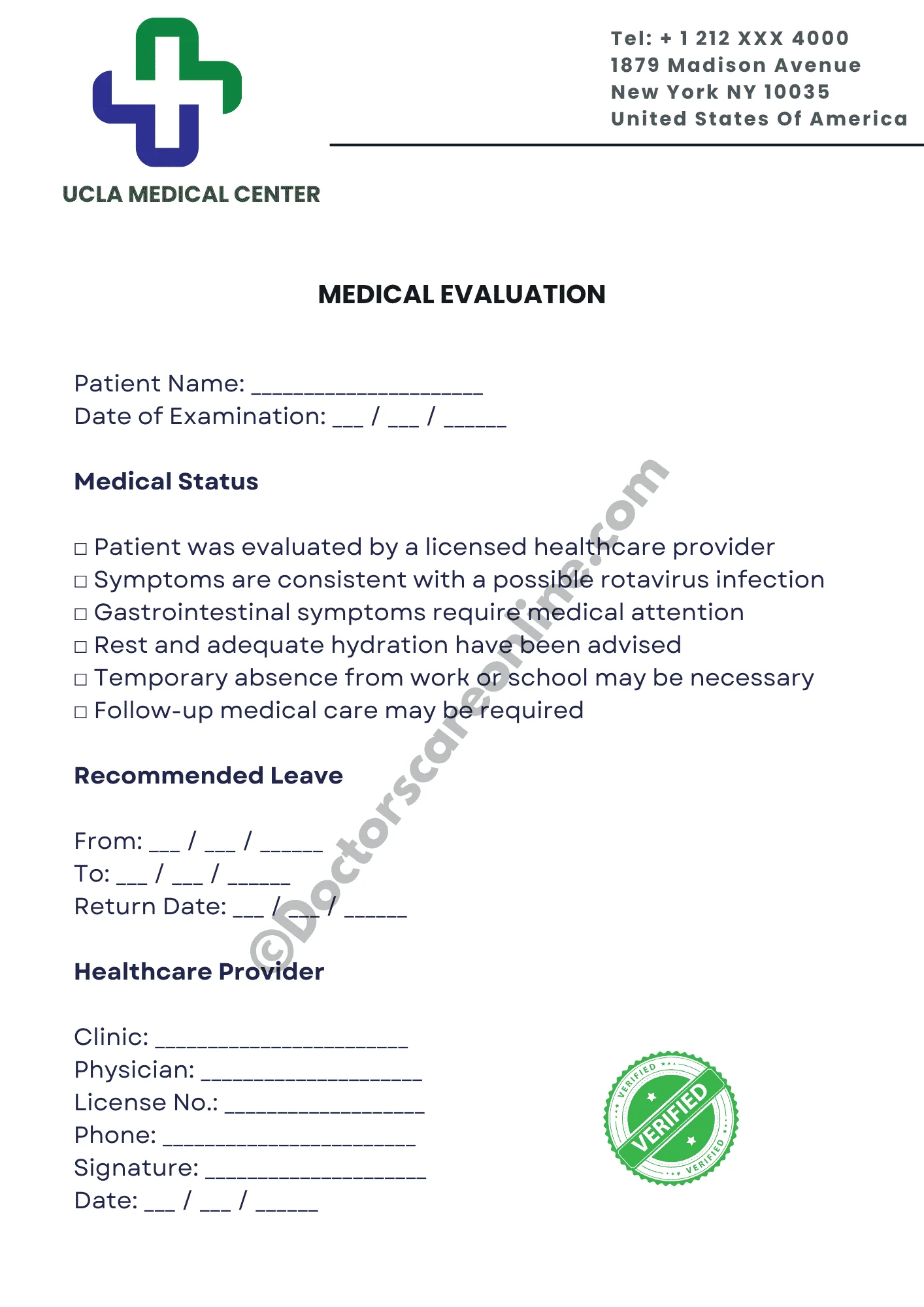
A medical note can vary according to the provider and purpose. It may contain:
| Information | Possible purpose |
|---|---|
| Patient name | Identifies the individual evaluated |
| Evaluation date | Confirms when the medical assessment occurred |
| Medical confirmation | Documents that an evaluation took place |
| Recommended absence | Indicates medically recommended time away when applicable |
| Activity restrictions | Identifies temporary limitations when appropriate |
| Return date | Provides a recommended return date when clinically justified |
| Provider information | Identifies the healthcare professional |
| Signature or authentication | Helps verify the document |
A note does not necessarily need to disclose every detail of a patient’s medical history. The amount of information included depends on the circumstances and applicable requirements.
Can an Online Doctor Provide a Rotavirus Doctor’s Note?
An online healthcare provider may be able to provide medical documentation after a telehealth evaluation when the patient’s condition can be appropriately assessed remotely and the provider determines that a note is medically justified.
However, an online appointment does not guarantee that a doctor’s note will be issued.
The healthcare provider may instead recommend:
- In-person medical evaluation
- Laboratory testing
- Emergency care
- Additional monitoring
- Follow-up care
- Supportive treatment
- No work or school restriction
This clinical decision belongs to the healthcare provider.
How Long Is a Rotavirus Doctor’s Note Valid?
There is no single nationwide validity period for every doctor’s note.
The applicable period may depend on:
- Dates specified by the healthcare provider
- Recommended recovery period
- Employer requirements
- School or college policies
- Daycare policies
- State or local requirements
- Whether follow-up evaluation is necessary
| Situation | What may apply |
|---|---|
| Work absence | Dates recommended by the healthcare provider and employer policy |
| School absence | School or college documentation requirements |
| Daycare absence | Applicable childcare illness policies |
| Extended symptoms | Follow-up evaluation may be appropriate |
| Return to normal activities | Follow provider and organization requirements |
If symptoms continue beyond the period covered by documentation, seek medical advice rather than changing or extending the note yourself.
Medical Documentation Should Never Be Altered
A medical document should be used exactly as issued by the healthcare provider.
Avoid:
- Changing dates
- Editing medical information
- Adding symptoms
- Changing recommended restrictions
- Altering provider information
- Modifying return dates
- Creating a document that appears to have been issued by a healthcare professional
If information on a note is incorrect, contact the issuing healthcare provider and request clarification or correction.
Who May Benefit From an Online Rotavirus Appointment?
An online consultation may be useful for people who:
- Have non-emergency gastrointestinal symptoms
- Want professional guidance about their symptoms
- Need to discuss whether an in-person visit is necessary
- Are concerned about how illness is affecting work or school
- Need to discuss legitimate medical documentation needs
- Prefer the convenience of starting care remotely where telehealth is appropriate
For infants, young children, older adults, people with significant medical conditions, or anyone showing signs of severe dehydration, the threshold for seeking prompt in-person medical care may be lower.
FAQs
1. Can rotavirus cause someone to miss several days of work or school?
It can. The severity and duration of symptoms vary, and frequent vomiting or diarrhea may temporarily interfere with normal responsibilities. The appropriate absence period should be determined according to the individual’s condition, medical assessment, and applicable workplace or school policy.
2. Is rotavirus contagious after symptoms improve?
A person may continue to spread rotavirus after symptoms improve. The CDC notes that people are most likely to spread the virus while they have symptoms and during the first three days after recovery.
3. Can an online doctor determine whether I need an in-person rotavirus evaluation?
Yes, a healthcare provider may assess the information available during a telehealth visit and determine whether remote care is appropriate or whether an in-person examination, testing, or urgent treatment is needed.
4. Can a parent schedule an online appointment about a child’s rotavirus symptoms?
Telehealth availability and rules for treating minors vary by provider and location. When an appointment involves a child, the parent or caregiver should follow the service’s requirements regarding the child’s presence, consent, and medical information.
5. What should I do if I cannot connect to my online appointment?
First, check your internet connection, device, microphone, camera, and appointment instructions. If the technical problem continues, use the website’s available support options, including the chatbox, to ask for help. HHS also recommends contacting the healthcare provider or care team when technical problems interfere with a telehealth appointment.
Medical Disclaimer: This information is provided for general educational purposes and is not a substitute for professional medical advice, diagnosis, or treatment. Rotavirus symptoms can overlap with other infections and medical conditions, and only a qualified healthcare professional can determine the appropriate diagnosis and care for an individual patient.
A doctor’s note should only be issued by a licensed healthcare provider following an appropriate medical evaluation. An online appointment does not guarantee a diagnosis, treatment, medical leave, work excuse, school excuse, or doctor’s note.



Reviews
There are no reviews yet.