
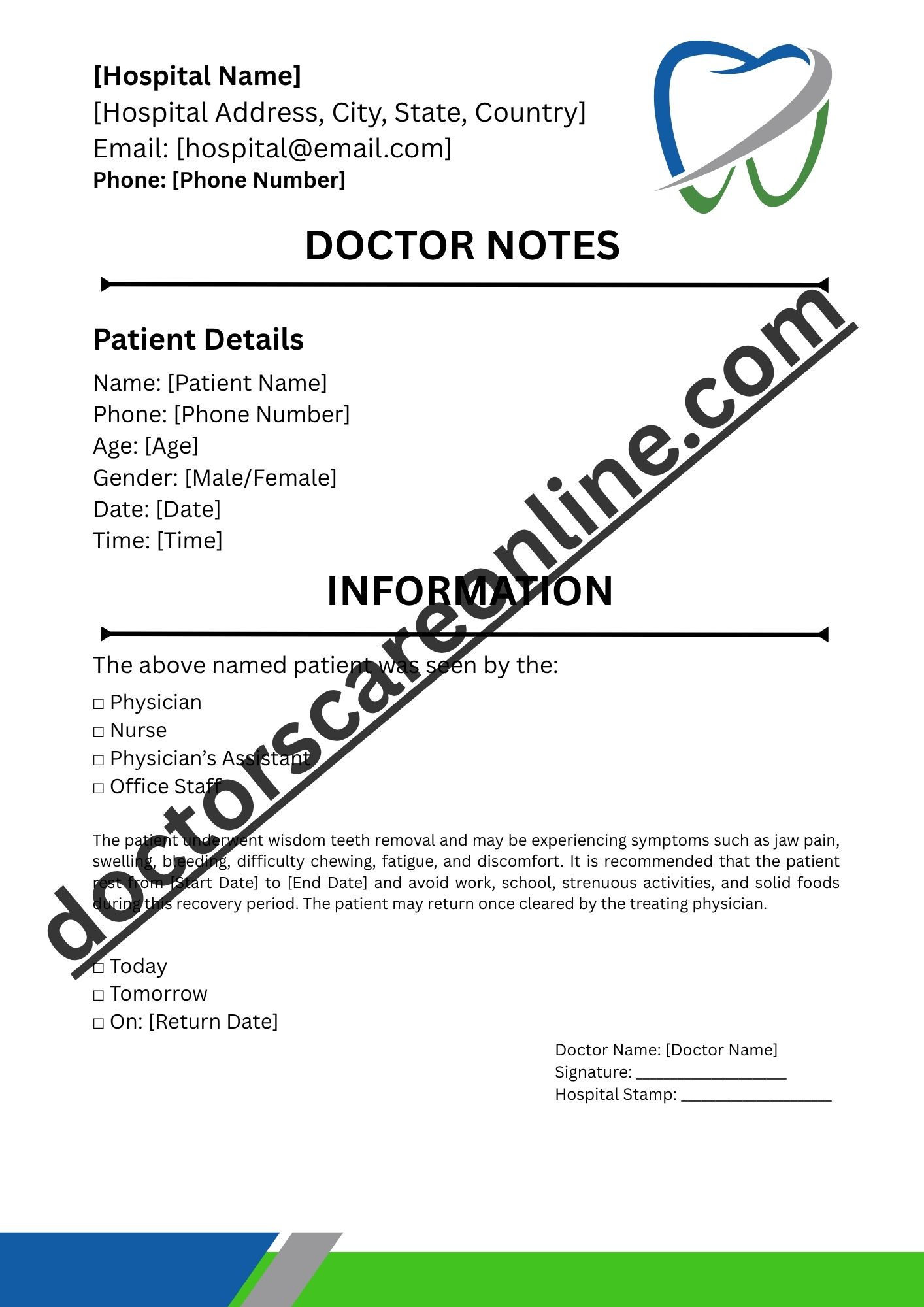
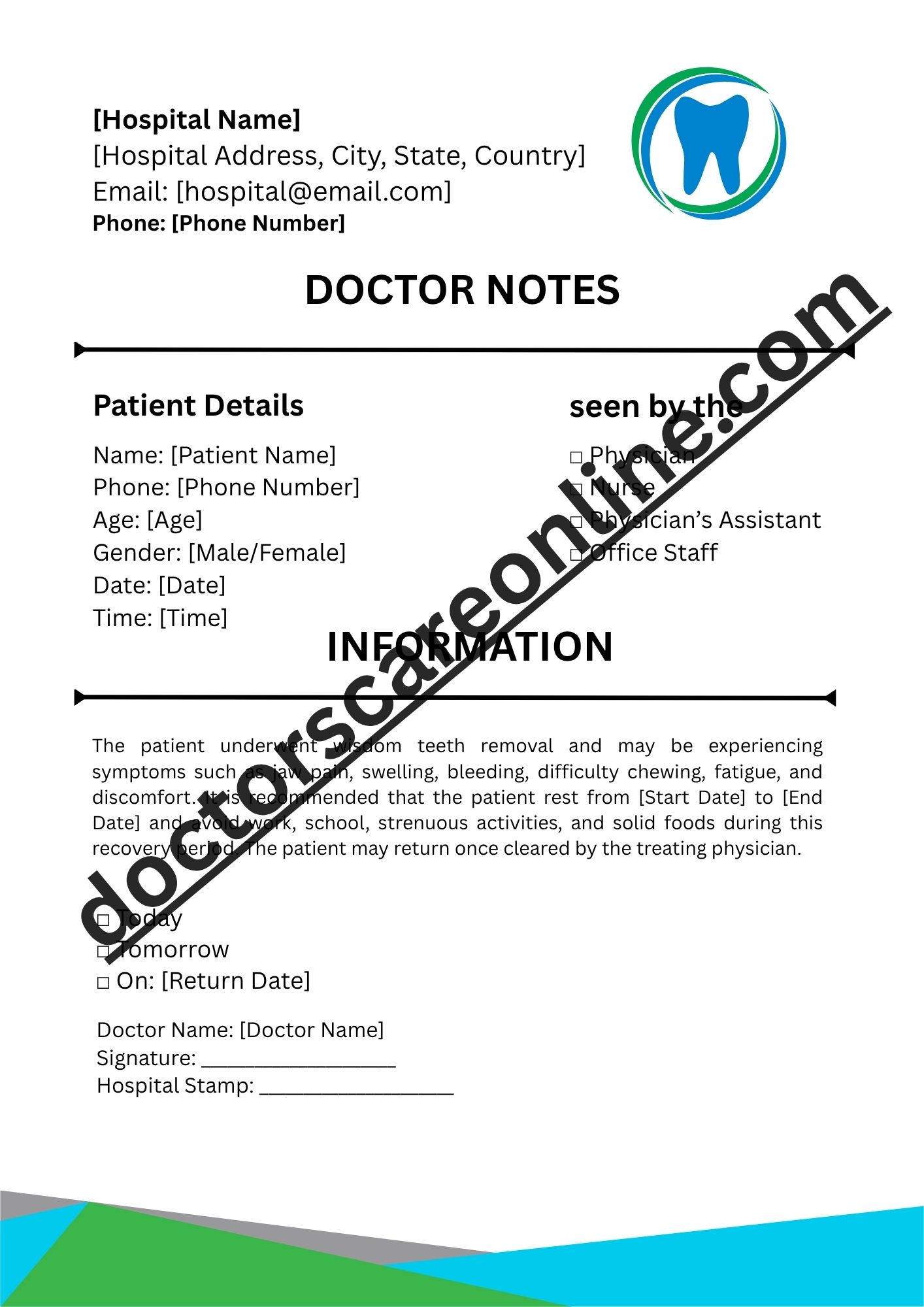
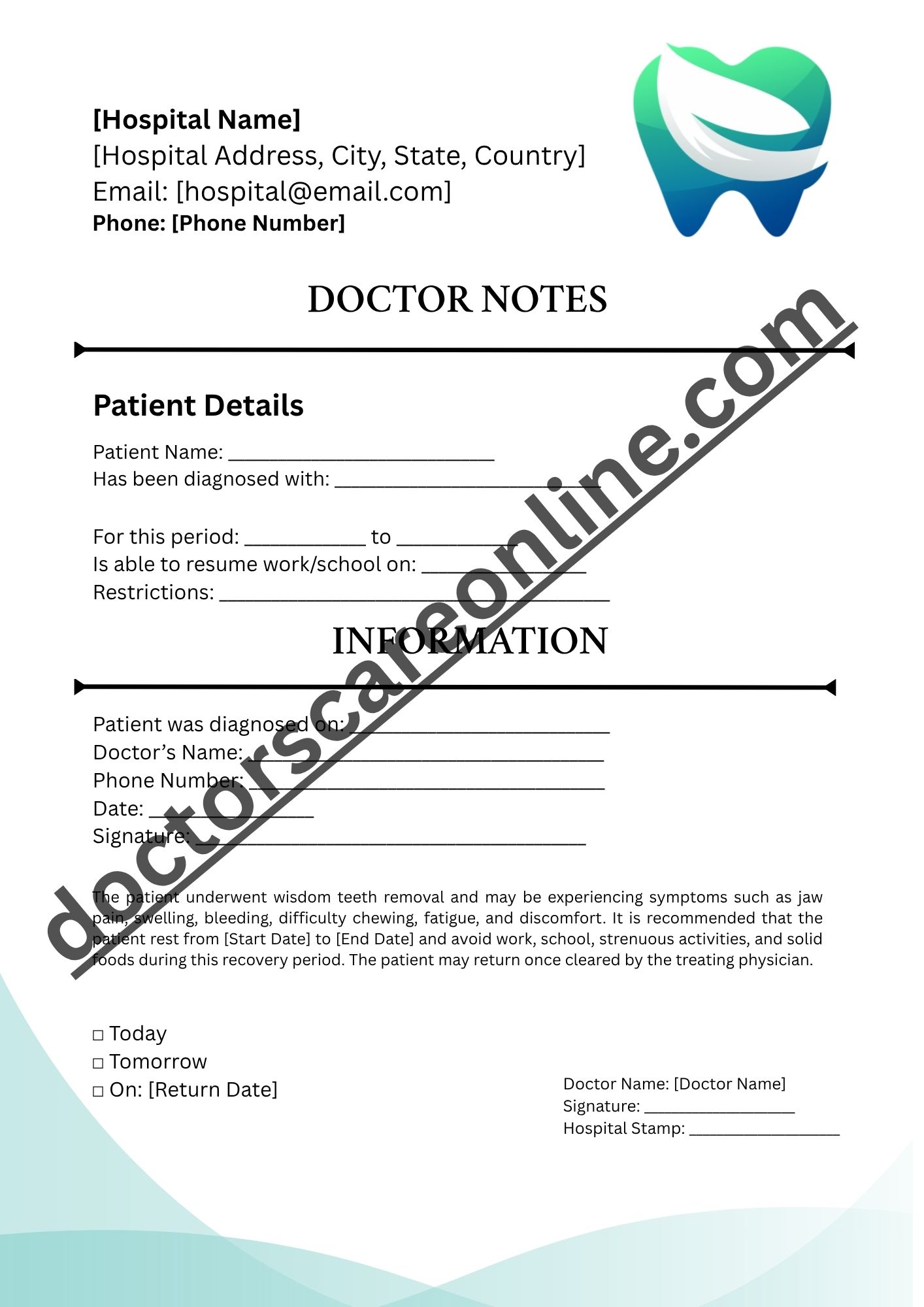
A doctors note for wisdom teeth is an official document provided by a licensed dentist or oral surgeon after evaluating or treating a patient’s wisdom teeth. It verifies that you received professional dental care and may require temporary leave from work, school, or other obligations while recovering.
Although people often refer to it as a “doctor’s note,” these documents are commonly issued by dental professionals because wisdom tooth treatment falls under dental care. The note is intended to confirm your visit and outline any medically recommended recovery period or activity restrictions.
A wisdom teeth note may be issued for several reasons, including:
- Surgical removal of one or more wisdom teeth
- Impacted wisdom teeth requiring a complex extraction
- Severe pain or swelling caused by wisdom teeth
- Dental infections requiring treatment
- Recovery after oral surgery
- Follow-up appointments for healing assessment
The document is typically used to explain medically necessary absences and support requests for short-term leave while the extraction site heals.
When Do You Need a Doctors Note After Wisdom Teeth Removal?
Not every wisdom tooth extraction requires time away from work or school. However, many people experience temporary discomfort that makes it difficult to perform normal activities, especially after a surgical extraction.
You may need a doctor’s note in the following situations:
Surgical Wisdom Tooth Extraction
Removing impacted or partially erupted wisdom teeth often involves a surgical procedure. Since healing may take several days, your dentist may recommend staying home until swelling and discomfort begin to improve.
Recovery After Sedation or General Anesthesia
Many wisdom tooth procedures involve IV sedation or general anesthesia. Because these medications can temporarily affect coordination, concentration, and judgment, patients are usually advised not to return to work, drive, or attend school immediately after the procedure.
Significant Facial Swelling
Swelling typically reaches its peak within the first two to three days after surgery. If facial swelling limits speaking, eating, or normal movement, your dentist may recommend additional recovery time.
Persistent Pain and Discomfort
Some soreness is expected after extraction, but pain can make it difficult to focus on physically demanding tasks or activities that require constant communication. A recovery note helps explain these temporary limitations.
Physically Demanding Jobs
Employees whose work involves lifting heavy objects, operating machinery, construction work, warehouse duties, or other strenuous activities may require additional leave because increased physical activity can interfere with healing.
School or College Attendance
Students may need an excuse note if surgery causes them to miss classes, examinations, laboratory sessions, or important academic activities during the recovery period.
Dental Infection Before or After Surgery
If a wisdom tooth infection develops before extraction or healing becomes complicated afterward, additional treatment and follow-up appointments may extend the recommended recovery period.
Can a Dentist Give You a Doctors Note?
Yes. A licensed dentist or oral surgeon can issue a dental excuse note or medical documentation following wisdom tooth treatment.
Because wisdom tooth removal is a recognized dental procedure, employers, schools, colleges, and universities generally accept documentation from licensed dental professionals. The note confirms that you received treatment and includes any recovery recommendations based on your condition.
Depending on your situation, the dentist may provide documentation for:
- Work absences
- School or college absences
- University attendance requirements
- Follow-up dental appointments
- Temporary activity restrictions
- Return-to-work recommendations
- Return-to-school guidance
In many cases, the note is prepared immediately after your appointment. If your recovery takes longer than expected due to complications such as infection or dry socket, your dentist may issue updated documentation after a follow-up evaluation.
What Information Is Included in a Wisdom Teeth Doctors Note?
A wisdom teeth doctor’s note is usually straightforward while protecting the patient’s privacy. It provides only the information necessary to verify treatment and explain the recommended recovery period.
| Information Included | Purpose |
|---|---|
| Patient’s Name | Identifies the individual who received dental treatment |
| Appointment Date | Confirms when the dental visit or surgery occurred |
| Dental Provider Information | Identifies the licensed dentist or oral surgeon |
| Procedure Performed | States that wisdom tooth evaluation or extraction was completed, when appropriate |
| Recommended Recovery Period | Indicates the suggested time away from work or school |
| Return Date | Provides the estimated date when normal activities may resume |
| Temporary Restrictions | Lists any limitations during recovery, if necessary |
| Provider Signature | Confirms the document was issued by an authorized dental professional |
| Clinic Contact Information | Allows verification if permitted by office policy |
To protect patient confidentiality, dental notes generally do not include detailed medical records, X-rays, or sensitive health information unless the patient specifically authorizes additional disclosure or a legal requirement applies.
Common Reasons Dentists Recommend Time Off
The amount of recovery time varies from one patient to another. Some people return to normal activities within a day or two, while others need a longer recovery period because of the complexity of the extraction.
- Impacted Wisdom Teeth – Impacted teeth often require surgical removal beneath the gum tissue. These procedures are more invasive and usually involve a longer healing period than simple extractions.
- Multiple Teeth Removed – Removing all four wisdom teeth during one appointment often leads to increased swelling and jaw soreness, making short-term rest beneficial.
- Recovery From Sedation – Sedation medications may continue affecting alertness even after the procedure. Patients are generally advised to avoid driving, operating equipment, signing important documents, or making major decisions until the effects wear off.
- Pain Management – Prescription or over-the-counter pain medications may cause drowsiness or reduce concentration. If medication affects your ability to perform your job safely, your dentist may recommend staying home temporarily.
- Swelling and Jaw Stiffness – Limited jaw movement can make speaking, eating, and even smiling uncomfortable during the first few days of recovery, especially after complex oral surgery.
- Healing Complications – Conditions such as dry socket, delayed healing, or localized infection may require additional rest, follow-up care, and an extended recovery recommendation before returning to regular activities.
How Many Days Off Do You Need After Wisdom Teeth Removal?
One of the most common questions patients ask is how long they should stay home after wisdom teeth extraction. The answer depends on several factors, including the number of teeth removed, whether the teeth were impacted, the type of procedure performed, and how quickly your body heals.
Some people feel well enough to return to desk work or classes within a day or two, while others may need several additional days of rest. Your dentist or oral surgeon will recommend a recovery period based on your individual condition rather than following a fixed timeline.
| Procedure | Typical Time Off |
|---|---|
| Simple removal of one wisdom tooth | 1–2 days |
| Removal of two wisdom teeth | 2–3 days |
| Removal of all four wisdom teeth | 3–5 days |
| Impacted wisdom tooth surgery | 5–7 days |
| Complex surgical extraction with complications | Up to 7–10 days (if recommended by the dentist) |
Keep in mind that these are general recovery estimates. Some individuals heal more quickly, while others may require additional follow-up care before returning to their regular schedule.
Recovery Timeline After Wisdom Teeth Extraction
Healing usually occurs in stages. Understanding what to expect each day can help patients recognize normal recovery and know when they should contact their dentist.
| Recovery Stage | What You May Experience |
|---|---|
| First 24 Hours | Mild bleeding, numbness, discomfort, beginning of clot formation |
| Day 2 | Swelling becomes more noticeable, mild jaw stiffness, tenderness |
| Day 3 | Swelling may reach its highest point before gradually improving |
| Days 4–5 | Pain generally decreases, eating becomes easier, energy improves |
| Days 6–7 | Most daily activities can usually be resumed if healing is progressing normally |
| Week 2 | Gum tissue continues healing and most patients feel close to normal |
Complete healing beneath the gums can take several weeks or even months, even though everyday activities usually resume much sooner.
What If Recovery Takes Longer Than Expected?
While many people recover without complications, some patients require additional healing time. If symptoms persist or worsen, your dentist may recommend extending your recovery period and provide updated documentation if needed.
Extended recovery may be appropriate when patients experience:
- Dry Socket – Dry socket occurs when the protective blood clot at the extraction site is lost too early, exposing underlying bone and nerves. This condition often causes significant pain and requires professional treatment.
- Infection – Although uncommon, bacteria can sometimes infect the extraction area. Symptoms may include increasing pain, swelling, fever, unpleasant taste, or drainage from the surgical site.
- Persistent Swelling – Swelling should gradually improve after the first few days. If swelling continues to increase instead of decreasing, your dentist may recommend another examination.
- Delayed Healing – Certain health conditions, smoking, poor oral hygiene, or difficult extractions may slow the normal healing process.
- Difficulty Opening the Mouth – Temporary jaw stiffness is common, but severe or prolonged difficulty opening the mouth may require additional evaluation.
If your dentist determines that more recovery time is medically necessary, they can update your work or school excuse note with revised recommendations.
How to Request a Doctor’s Note From Your Dentist
If you know your employer or school requires documentation, it’s helpful to mention this during your appointment. Most dental offices are familiar with providing recovery notes for wisdom tooth procedures.
Step 1: Inform the Dental Office
When scheduling your appointment or checking in, let the staff know that you may need documentation for work or school.
Step 2: Discuss Your Daily Responsibilities
Tell your dentist about your occupation, school schedule, or physical job requirements. This helps them provide recovery recommendations that match your activities.
Step 3: Follow the Recommended Recovery Plan
Your dentist will assess the procedure, your overall condition, and expected healing before recommending an appropriate period of leave.
Step 4: Review the Information Before Leaving
Before leaving the clinic, check that your note includes the correct dates, provider information, and recommended return date.
Step 5: Request Updated Documentation If Necessary
If complications develop or recovery takes longer than expected, schedule a follow-up appointment. After re-evaluating your condition, your dentist may provide an updated note if additional recovery time is medically appropriate.
Can You Get a Doctors Note Before Wisdom Teeth Surgery?
In many cases, yes. If your wisdom tooth extraction is scheduled in advance, your dental office may provide documentation confirming the upcoming procedure. This can help employees or students notify their workplace or educational institution before the surgery date.
Pre-surgery documentation may include:
- Date of the scheduled procedure
- Confirmation of the planned oral surgery
- Expected recovery period
- Anticipated return-to-work or return-to-school timeframe
- Any known post-operative activity restrictions
Providing advance notice allows employers, teachers, or professors to plan for your temporary absence and may reduce last-minute scheduling issues.
Tips for Faster Recovery After Wisdom Teeth Removal
Recovering from wisdom teeth surgery is usually straightforward when post-operative instructions are followed carefully. While healing takes time, adopting healthy habits can improve comfort and reduce the risk of complications.
Get Plenty of Rest – Rest is one of the most important parts of recovery. Try to avoid unnecessary physical activity during the first 24 to 48 hours and give your body time to heal.
Use Ice Packs During the First Day – Applying a cold pack to the outside of your cheek for short intervals during the first day may help reduce swelling and improve comfort.
Take Medications as Directed – Use pain relievers, antibiotics, or other prescribed medications exactly as instructed by your dentist. Avoid skipping doses or stopping medication early unless advised by your healthcare provider.
Stay Hydrated – Drink plenty of water throughout the day. Proper hydration supports healing, but avoid drinking through a straw because the suction can interfere with the blood clot.
Eat Soft, Nutritious Foods – Choose foods that are easy to chew and swallow without placing pressure on the surgical area. A balanced diet also provides nutrients that support tissue repair.
Keep Your Mouth Clean – Follow your dentist’s instructions for brushing and rinsing. Good oral hygiene helps reduce the buildup of bacteria while protecting the extraction site.
Sleep With Your Head Elevated – Keeping your head slightly elevated during the first few nights may help minimize swelling and improve comfort while sleeping.
Attend Follow-Up Visits – Even if you feel better, attending scheduled follow-up appointments allows your dentist to confirm that healing is progressing normally.
Foods to Eat During Wisdom Teeth Recovery
Eating the right foods during recovery can make healing more comfortable and reduce irritation around the extraction site. Soft foods require less chewing and are less likely to disturb the surgical area.
| Food | Why It’s Helpful |
|---|---|
| Yogurt | Soft texture and easy to swallow |
| Applesauce | Gentle on healing gums |
| Mashed potatoes | Filling and easy to eat |
| Oatmeal (after initial recovery) | Soft and nutritious |
| Scrambled eggs | Good source of protein |
| Cottage cheese | Soft texture with added protein |
| Blended vegetable soup | Warm (not hot) and nutritious |
| Smoothies eaten with a spoon | Easy to consume while avoiding straw use |
| Mashed bananas | Rich in vitamins and easy to digest |
| Avocado | Soft texture with healthy fats |
Foods to Avoid After Wisdom Teeth Removal
Certain foods can irritate the extraction site, become trapped in the socket, or interfere with healing.
| Foods to Avoid | Reason |
|---|---|
| Chips | Sharp edges may injure healing tissue |
| Popcorn | Small kernels can become lodged in the extraction site |
| Nuts | Hard texture requires excessive chewing |
| Hard candies | Increase pressure on healing gums |
| Chewy bread | Difficult to chew comfortably |
| Sticky candy | May disturb the surgical area |
| Spicy foods | Can irritate sensitive tissue |
| Extremely hot foods or drinks | May increase discomfort during early healing |
| Carbonated beverages | May cause irritation for some patients during initial recovery |
| Alcoholic beverages | Can interfere with medications and healing |
As healing progresses, your dentist will advise when you can safely return to your regular diet.
Wisdom Teeth Treatment Options
Not every wisdom tooth requires immediate removal. Dentists recommend treatment based on the position of the tooth, symptoms, and the potential risk of future complications.
Common treatment options include:
- Regular monitoring of healthy wisdom teeth
- Prescription pain medication for temporary discomfort
- Antibiotics for dental infections
- Professional cleaning around partially erupted teeth
- Simple wisdom tooth extraction
- Surgical removal of impacted wisdom teeth
- Follow-up care to monitor healing
Warning Signs That Require Immediate Dental Care
Although most patients recover without major problems, you should contact your dentist or oral surgeon if you notice any of the following warning signs:
- Heavy or Persistent Bleeding
- Minor oozing is normal during the first 24 hours.
- Bleeding that continues or becomes heavy despite following your dentist’s instructions should be evaluated promptly.
- Increasing Swelling After Several Days
- Swelling usually peaks within two to three days after surgery.
- Swelling that continues to worsen instead of improving may indicate a complication.
- Severe Pain That Doesn’t Improve
- Mild to moderate discomfort is expected after wisdom teeth removal.
- Intense or worsening pain several days after surgery may be a sign of dry socket or another dental issue.
- Fever
- A fever during recovery may indicate an infection.
- Contact your dental provider if you develop a high temperature or flu-like symptoms.
- Pus or Unpleasant Drainage
- Yellow or white discharge from the extraction site is not considered normal.
- A persistent bad taste or unpleasant odor may also suggest an infection.
- Difficulty Swallowing or Breathing
- Significant swelling that makes swallowing or breathing difficult requires immediate medical attention.
- Seek emergency care if these symptoms develop.
- Allergic Reaction to Medication
- Watch for symptoms such as:
- Widespread skin rash
- Facial or lip swelling
- Severe itching
- Difficulty breathing
- Seek urgent medical care if an allergic reaction occurs.
- Watch for symptoms such as:
Early evaluation and treatment can often prevent these issues from becoming more serious.
Common Mistakes People Make After Wisdom Teeth Removal
Following your dentist’s post-operative instructions is one of the best ways to support healing. Avoid these common mistakes during recovery:
- Using a Straw Too Soon
- The suction created while drinking through a straw can dislodge the protective blood clot.
- This increases the risk of developing dry socket.
- Smoking or Vaping
- Smoking reduces blood flow to the surgical area.
- It also increases the likelihood of dry socket and delayed healing.
- Ignoring Post-Operative Instructions
- Skipping prescribed medications.
- Not following dietary recommendations.
- Returning to normal activities before your dentist recommends.
- Eating Hard or Crunchy Foods
- Foods such as chips, popcorn, nuts, and hard crackers can irritate the extraction site.
- They may also become trapped in the healing socket.
- Excessive Physical Activity
- Heavy lifting, intense workouts, and strenuous exercise can increase blood pressure.
- This may lead to renewed bleeding and delayed recovery.
- Touching the Extraction Site
- Avoid touching the area with your fingers or tongue.
- This can introduce bacteria and disturb the healing blood clot.
- Poor Oral Hygiene
- Neglecting oral care can increase the risk of infection.
- Clean your mouth gently according to your dentist’s instructions.
- Missing Follow-Up Appointments
- Follow-up visits help your dentist monitor healing.
- They also allow any complications to be identified and treated early.
Wisdom teeth are the last teeth to develop in the mouth, usually appearing between the ages of 17 and 25. Also known as third molars, they are located at the very back of the upper and lower jaws. Some people develop all four wisdom teeth, while others may have fewer or none.
Although wisdom teeth can grow without causing problems, they may sometimes lead to pain, swelling, infection, or damage to nearby teeth. Understanding their symptoms, treatment options, and aftercare can help you maintain good oral health.
10 Important Things to Know About Wisdom Teeth
1. What Are Wisdom Teeth?
Wisdom teeth are the third set of molars located at the back of the mouth. They are the final teeth to emerge and may help with chewing when they grow properly and remain healthy. However, modern jaws do not always have enough space to accommodate them comfortably.
2. At What Age Do Wisdom Teeth Appear?
Wisdom teeth usually erupt between the ages of 17 and 25, although the timing varies from person to person. Some may emerge earlier or later, while others remain beneath the gums throughout life. Regular dental examinations can help determine whether they are developing normally.
3. What Are the Common Symptoms of Wisdom Teeth?
Wisdom teeth may not cause noticeable symptoms when they grow properly. However, problematic wisdom teeth can cause:
-
Pain or tenderness at the back of the mouth.
-
Swollen, red, or bleeding gums.
-
Jaw stiffness or discomfort while chewing.
-
Bad breath or an unpleasant taste.
-
Food getting trapped around the affected tooth.
-
Difficulty opening the mouth fully.
Persistent or worsening symptoms should be evaluated by a dentist.
4. What Are Impacted Wisdom Teeth?
An impacted wisdom tooth is a tooth that cannot fully emerge through the gums because of insufficient space, its position, or other obstructions. It may remain trapped under the gum tissue or grow sideways against an adjacent tooth.
Impacted wisdom teeth can increase the risk of gum infections, tooth decay, and damage to neighboring teeth. A dentist may recommend monitoring or treatment depending on the tooth’s position and condition.
5. Do All Wisdom Teeth Need to Be Removed?
No, not every wisdom tooth requires extraction. If a wisdom tooth grows correctly, remains healthy, does not damage nearby teeth, and can be cleaned properly, it may not need to be removed.
Dentists generally consider extraction when wisdom teeth cause recurring infections, significant pain, decay that cannot be managed appropriately, cysts, or damage to adjacent teeth. The decision should be based on a clinical examination and individual risk factors.
6. How Are Wisdom Teeth Diagnosed?
A dentist examines the mouth to assess the condition of the gums, surrounding teeth, and wisdom teeth. Dental X-rays may be recommended to identify impacted teeth, determine their direction of growth, and assess their relationship to nearby structures, including nerves.
This evaluation helps the dentist decide whether observation, preventive care, or extraction is appropriate.
7. What Happens During Wisdom Tooth Removal?
Wisdom tooth removal is a dental procedure performed under local anesthesia, with sedation or general anesthesia used in selected cases. A fully erupted tooth may be removed relatively simply, while an impacted tooth may require a surgical extraction.
The dentist or oral surgeon explains the procedure, discusses potential risks, and provides instructions for recovery. The complexity of the extraction depends on the tooth’s position and the surrounding anatomy.
8. How Long Does It Take to Recover After Wisdom Tooth Extraction?
Initial recovery often takes a few days, although healing time varies according to the complexity of the procedure and the individual’s health. Mild pain, swelling, bruising, and jaw stiffness are common during the early recovery period.
To support healing:
-
Eat soft foods initially and gradually return to your usual diet.
-
Follow your dentist’s instructions for oral hygiene.
-
Use prescribed or recommended pain relief as directed.
-
Avoid smoking and drinking through a straw during the early healing period.
-
Avoid forceful rinsing or spitting immediately after surgery.
-
Attend follow-up appointments if recommended.
Complete healing of the extraction site may take several weeks.
9. What Complications Can Wisdom Teeth Cause?
Wisdom teeth can sometimes contribute to several dental problems, including:
-
Pericoronitis: Inflammation or infection of the gum surrounding a partially erupted tooth.
-
Tooth decay: Bacteria and food particles may accumulate in areas that are difficult to clean.
-
Gum disease: Plaque buildup around wisdom teeth can irritate the gums.
-
Damage to neighboring teeth: An impacted tooth may contribute to decay or other damage to the adjacent molar.
-
Cysts: Fluid-filled sacs can occasionally develop around an impacted tooth.
Early dental assessment can help identify these problems and determine the appropriate treatment.
10. When Should You See a Dentist for Wisdom Teeth?
You should schedule a dental appointment if you experience persistent wisdom tooth pain, recurring gum swelling, difficulty chewing, bad breath that does not improve with oral hygiene, or difficulty opening your mouth.
Seek urgent dental care if you develop fever, increasing facial swelling, or signs of a spreading infection. Difficulty swallowing or breathing, or rapidly spreading swelling, requires emergency medical attention.
Common Wisdom Tooth Problems and Their Symptoms
| Wisdom tooth problem | Common symptoms |
|---|---|
| Impacted wisdom tooth | Jaw discomfort, pressure, or pain |
| Gum infection | Redness, swelling, tenderness, or unpleasant taste |
| Tooth decay | Toothache or sensitivity to hot and cold |
| Food trapped around the tooth | Gum irritation and bad breath |
| Spreading dental infection | Fever, facial swelling, or difficulty swallowing |
How Can You Maintain Healthy Wisdom Teeth?
Although you cannot prevent wisdom teeth from becoming impacted, good oral hygiene and regular dental examinations can help reduce the risk of complications.
-
Brush twice daily with fluoride toothpaste.
-
Clean the back molars carefully to remove plaque and food particles.
-
Floss daily where possible.
-
Visit your dentist regularly for oral health assessments.
-
Follow professional advice regarding monitoring or removing wisdom teeth.
Frequently Asked Questions
Q: Can wisdom teeth grow without causing pain?
A: Yes. Wisdom teeth can emerge normally without causing pain or other symptoms. However, some problems may develop without noticeable symptoms, so dental monitoring can be helpful.
Q: Can wisdom teeth cause headaches?
A: Wisdom tooth problems may contribute to jaw discomfort that sometimes spreads toward the head or temples. However, headaches can have many causes, and persistent headaches should not automatically be attributed to wisdom teeth.
Q: Is wisdom tooth removal painful?
A: Local anesthesia is used to minimize pain during extraction. Some discomfort, swelling, and soreness are normal afterward and can usually be managed with appropriate aftercare and pain relief.
Q: Can an impacted wisdom tooth damage other teeth?
A: Yes. In some cases, an impacted wisdom tooth can contribute to decay, gum problems, or damage to the neighboring molar. A dental examination and appropriate imaging help assess the risk.
Q: What happens if I do not remove my wisdom teeth?
A: If your wisdom teeth are healthy, functional, and easy to clean, they may not need removal. However, wisdom teeth that cause disease or damage may require treatment. Your dentist can recommend whether monitoring or extraction is the better option.
Q. Can I get a doctor’s note for wisdom teeth removal?
A: Yes. A licensed dentist or oral surgeon can provide a doctor’s note (or dental excuse note) after evaluating or removing your wisdom teeth if you need documentation for work, school, or college. The note typically includes your appointment date, recommended recovery period, and any temporary activity restrictions.
Q. How many days off work do I need after wisdom teeth removal?
A: Recovery time varies depending on the complexity of the extraction. Many people return to desk jobs within 1–3 days, while those with impacted wisdom teeth or physically demanding jobs may need 3–7 days or longer if recommended by their dentist.
Q. Can I go to work or school the day after wisdom teeth surgery?
A: It depends on your recovery and the type of activities involved. Some people can return the next day after a simple extraction, while others may need additional rest due to swelling, pain, or the effects of sedation. Always follow your dentist’s recommendations.
Q. What should a wisdom teeth doctor’s note include?
A: A wisdom teeth doctor’s note generally includes:
- Patient’s name
- Date of treatment
- Name of the dental provider
- Recommended recovery period
- Return-to-work or return-to-school date
- Activity restrictions (if applicable)
- Dentist’s signature and clinic details
Q. How long does it take to recover from wisdom teeth removal?
A: Most patients recover enough to resume normal daily activities within 3 to 7 days. However, healing time varies based on the type of extraction, the number of teeth removed, and individual health. Complete healing of the gum and underlying bone may take several weeks.
Related Post-





Reviews
There are no reviews yet.