

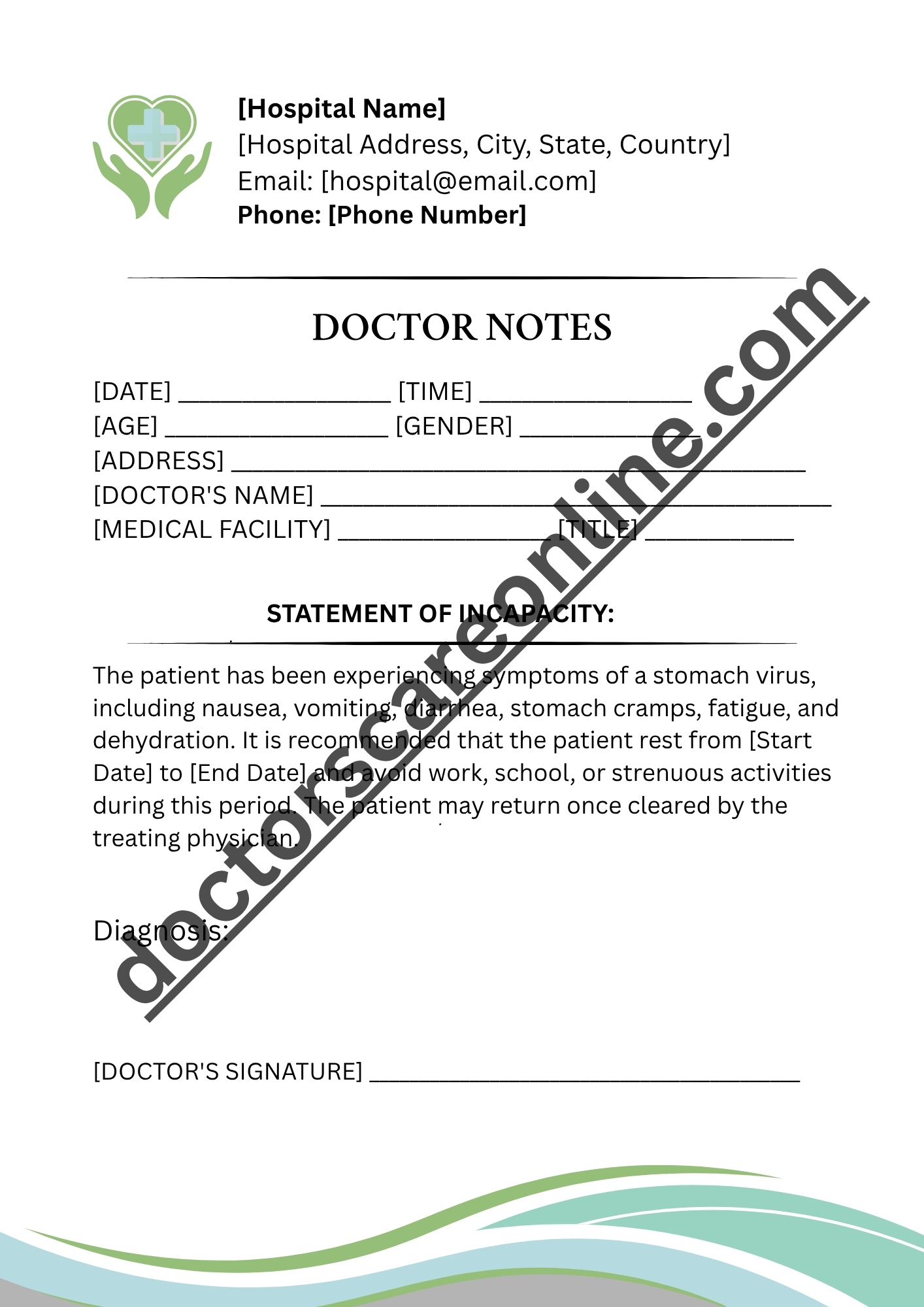
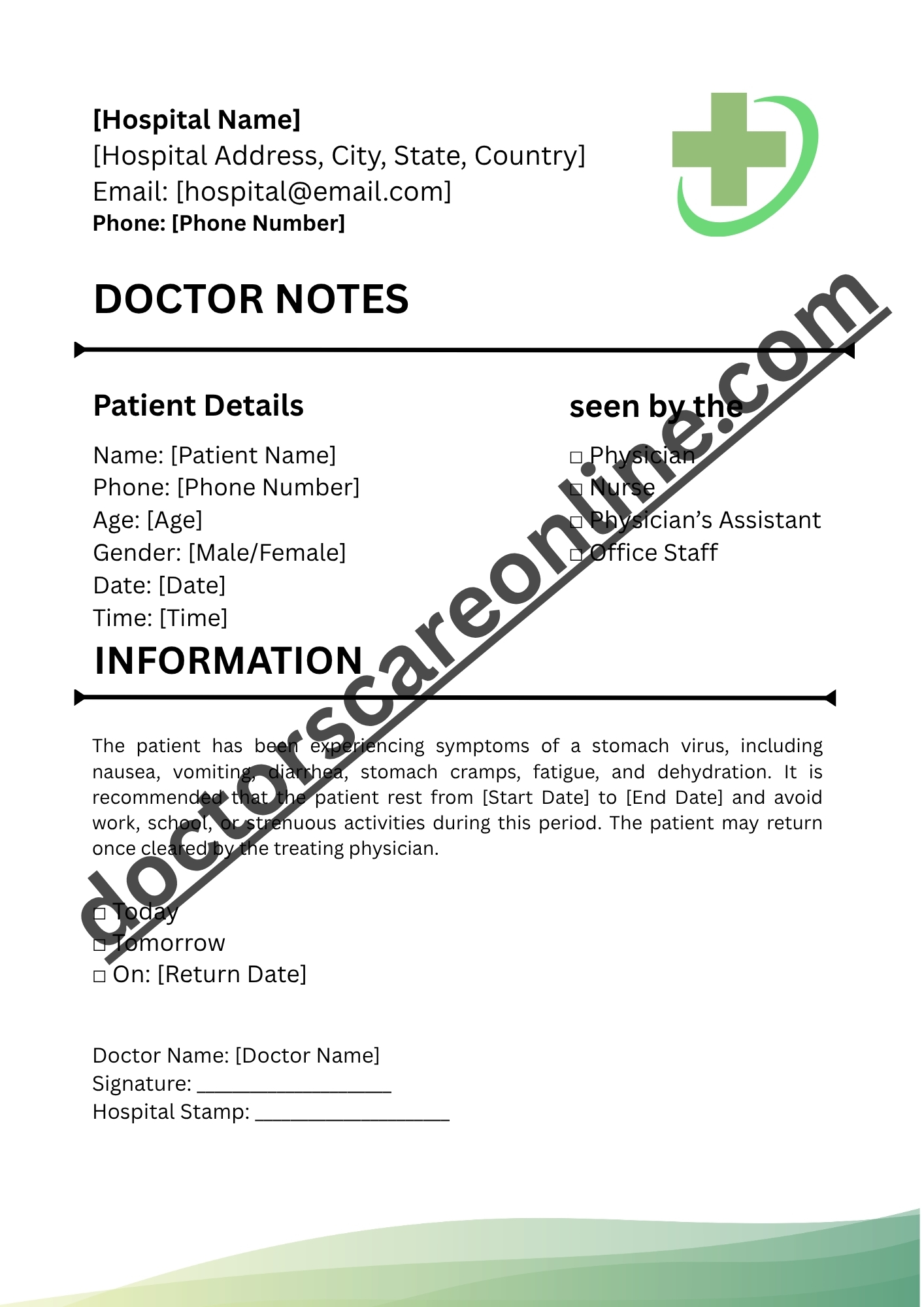
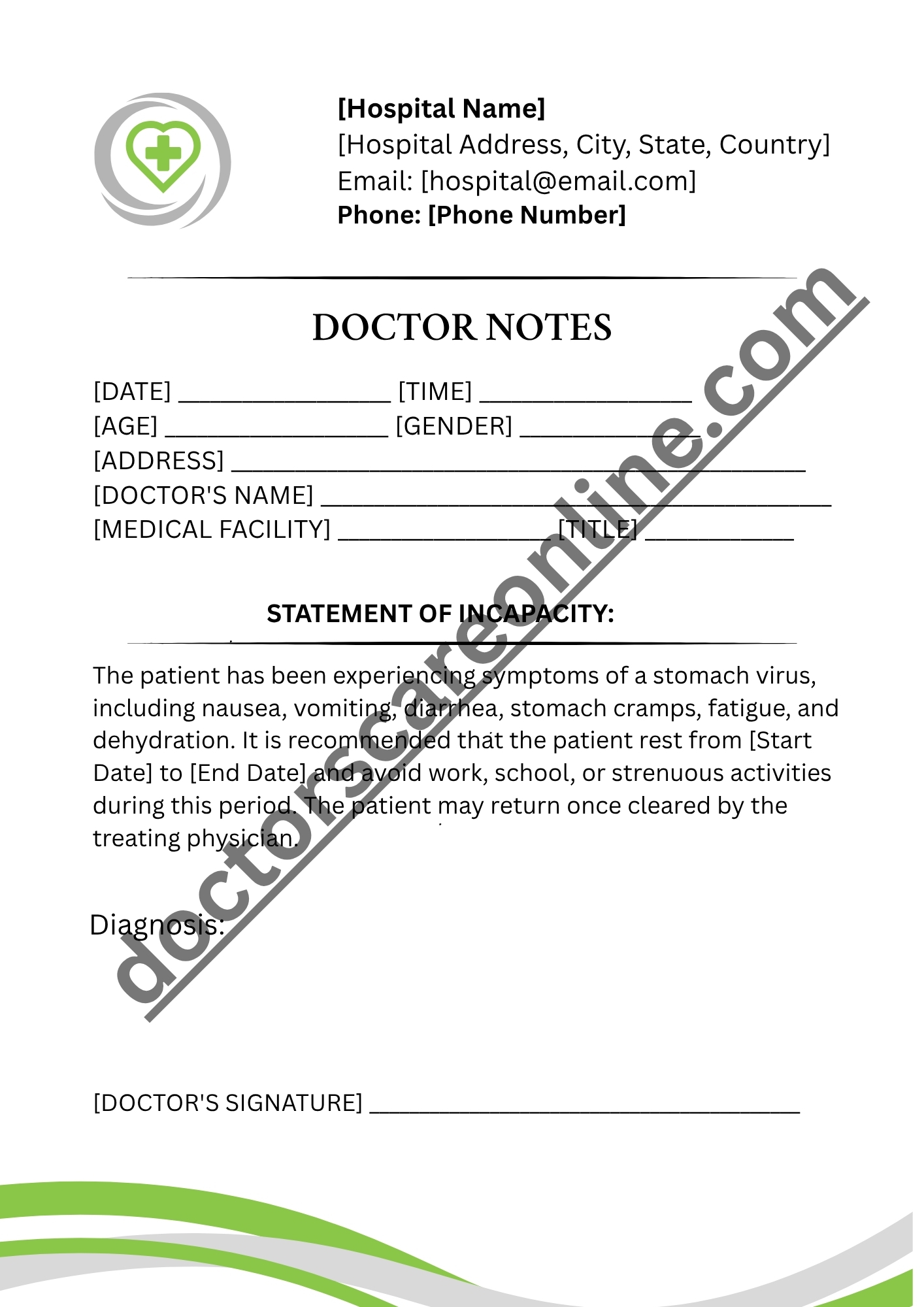
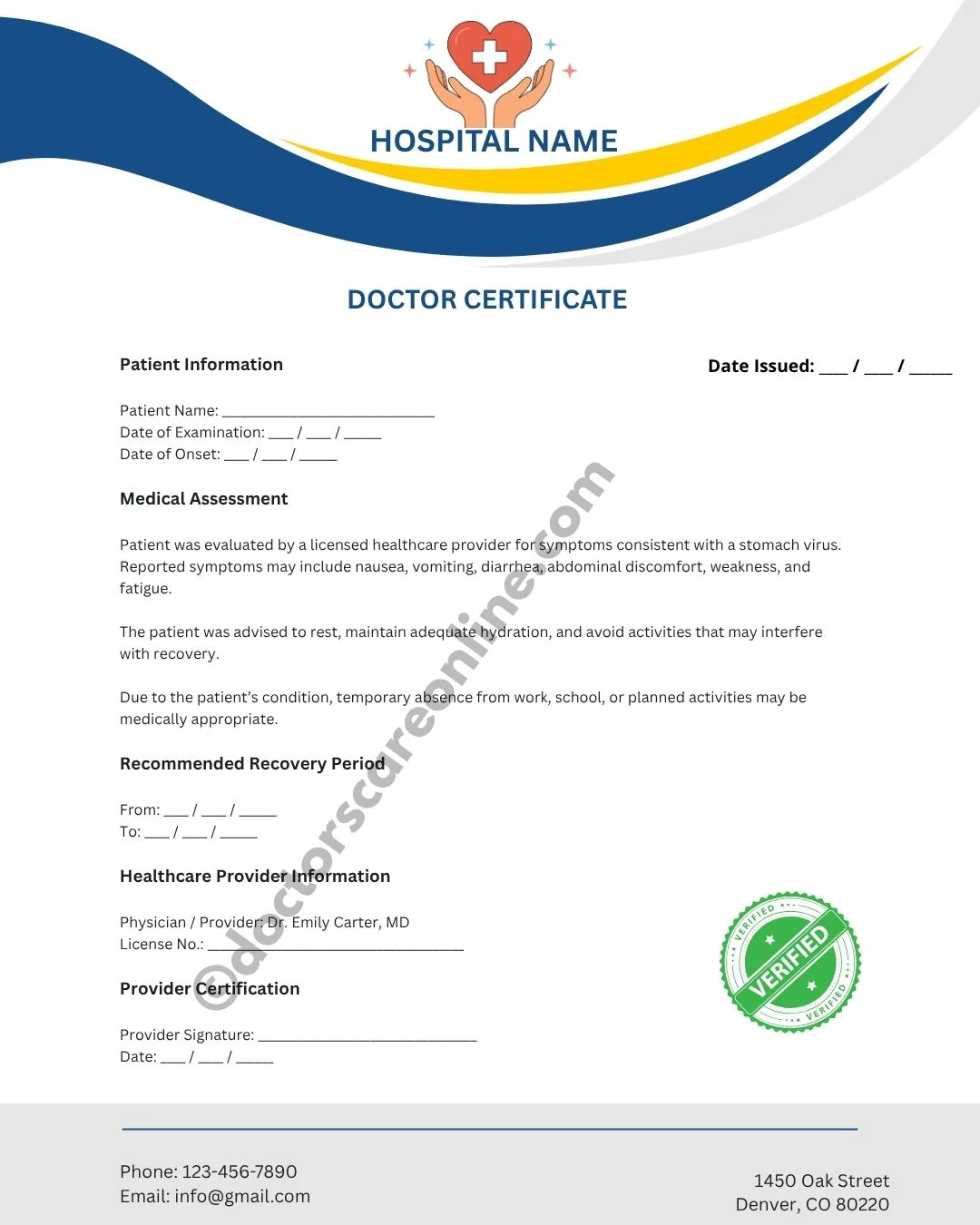
A doctor’s note for a stomach virus is a medical document provided by a licensed healthcare provider after evaluating a patient with symptoms of viral gastroenteritis. It confirms that the patient is experiencing a contagious illness that may require rest, treatment, and temporary absence from work, school, college, or other daily activities. Depending on the severity of symptoms, the note may also include the recommended recovery period, work restrictions, return-to-work date, and follow-up instructions.
A stomach virus can spread quickly through close contact, contaminated food or water, or touching infected surfaces. Because of its contagious nature, many employers, schools, and educational institutions require a doctor’s note to verify the illness and ensure that the person returns only after it is safe to do so.
Whether you need a doctor’s note for work, school, college, daycare, or travel purposes, this guide explains everything you need to know, including eligibility, symptoms, diagnosis, treatment, recovery time, online consultation options, and sample medical notes.
Common Situations Where a Doctor’s Note for Stomach Virus May Be Needed
| Situation | Why a Doctor’s Note May Be Required |
|---|---|
| Workplace | To approve sick leave and document the reason for absence. |
| School | To excuse missed classes and maintain attendance records. |
| College or University | To request excused absences, assignment extensions, or exam rescheduling. |
| Daycare | To confirm that a child has recovered before returning. |
| Food Service Jobs | To ensure employees are no longer contagious before handling food. |
| Healthcare Jobs | To protect vulnerable patients from infection. |
| Travel Insurance | To support trip cancellation or interruption claims due to illness. |
| Sports Activities | To receive medical clearance before returning to physical activity. |
Early Signs of a Stomach Virus
The early signs of a stomach virus (viral gastroenteritis) usually appear within 12 to 48 hours after exposure. Common symptoms include:
- Nausea or a feeling of sickness in the stomach
- Mild stomach cramps or abdominal discomfort
- Loss of appetite and reduced interest in food
- Vomiting, which may start suddenly
- Watery diarrhea or frequent loose stools
- Low-grade fever in some people
- Fatigue or unusual tiredness
- Headache caused by dehydration or illness
- Muscle aches or general body soreness
- Bloating or a feeling of fullness in the stomach
- Chills that may occur with fever
- Increased thirst due to fluid loss
- Dry mouth or other early signs of mild dehydration
When to See a Doctor
Seek medical attention if you experience:
- Vomiting that lasts longer than 24–48 hours
- Severe dehydration (dry mouth, dizziness, dark urine, or little urination)
- A fever above 102°F (38.9°C)
- Blood in your vomit or stool
- Severe or persistent abdominal pain
- Inability to keep fluids down
- Symptoms that continue for more than 2–3 days without improvement
Tip: At the first sign of a stomach virus, start drinking small amounts of water or an oral rehydration solution to help prevent dehydration. Rest, avoid heavy or greasy foods, and stay home to reduce the risk of spreading the virus to others.
How Long Is a Stomach Virus Contagious?
A stomach virus (viral gastroenteritis) is usually most contagious while you have symptoms, especially during episodes of vomiting and diarrhea. However, you can still spread the virus before symptoms begin and for several days after you feel better.
General Timeline
- Before symptoms: Some viruses can spread 1–2 days before symptoms appear.
- During illness: This is the most contagious period, particularly if you have vomiting or diarrhea.
- After symptoms stop: You may continue to spread the virus for 2–3 days, and in some cases (such as norovirus), up to 2 weeks or longer.
- Children and people with weakened immune systems may remain contagious for a longer period.
Possible Complications of a Stomach Virus
Most stomach viruses improve within a few days. However, severe cases can lead to complications if dehydration is not treated promptly.
Possible complications include:
- Moderate to severe dehydration
- Electrolyte imbalance
- Low blood pressure due to fluid loss
- Temporary weight loss
- Malnutrition in prolonged illness
- Kidney problems caused by severe dehydration
- Hospitalization for intravenous (IV) fluids
- Worsening of existing medical conditions
Seek immediate medical care if you develop severe dehydration, confusion, persistent vomiting, blood in your stool, or worsening abdominal pain.
Related Post





Reviews
There are no reviews yet.