
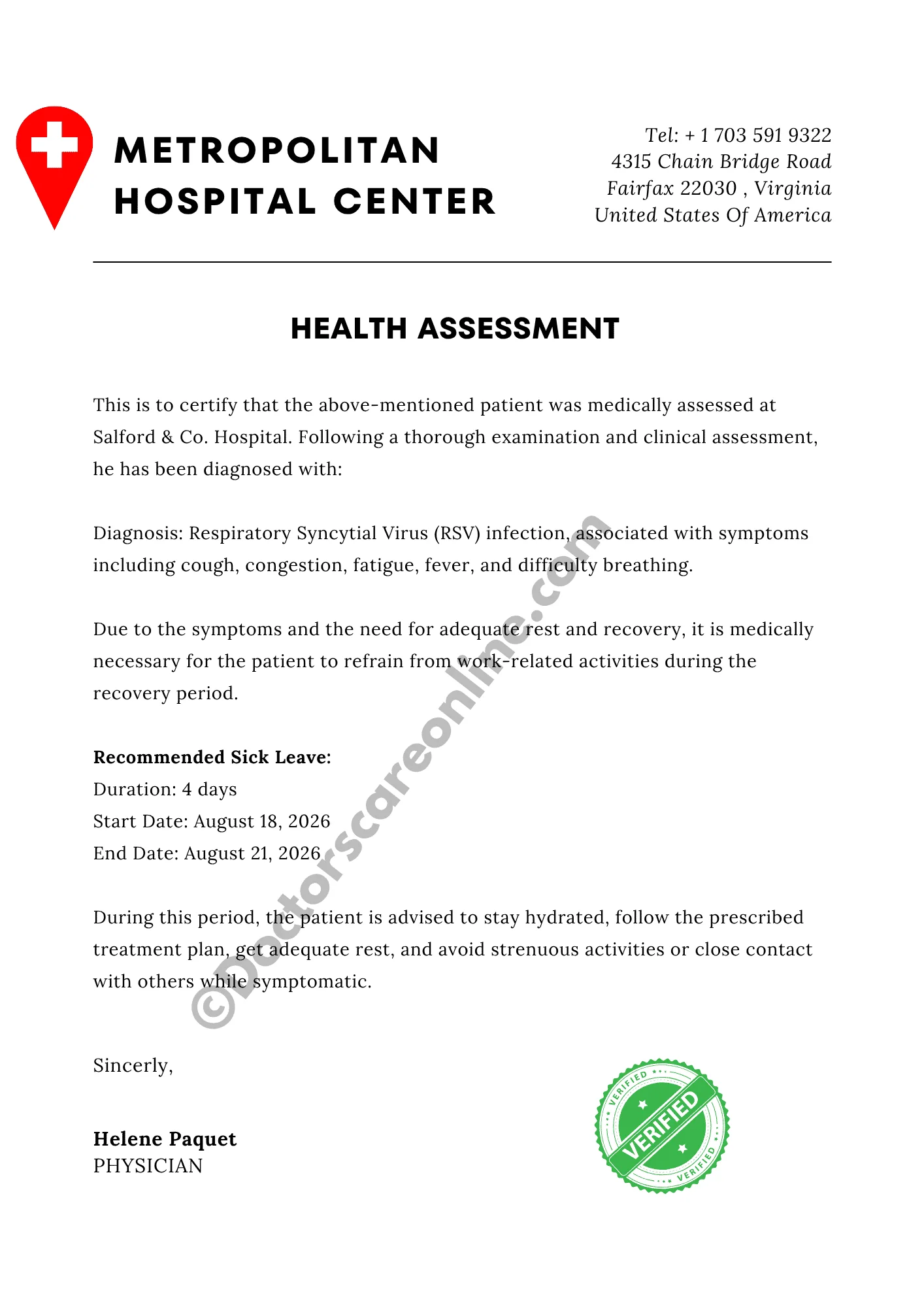
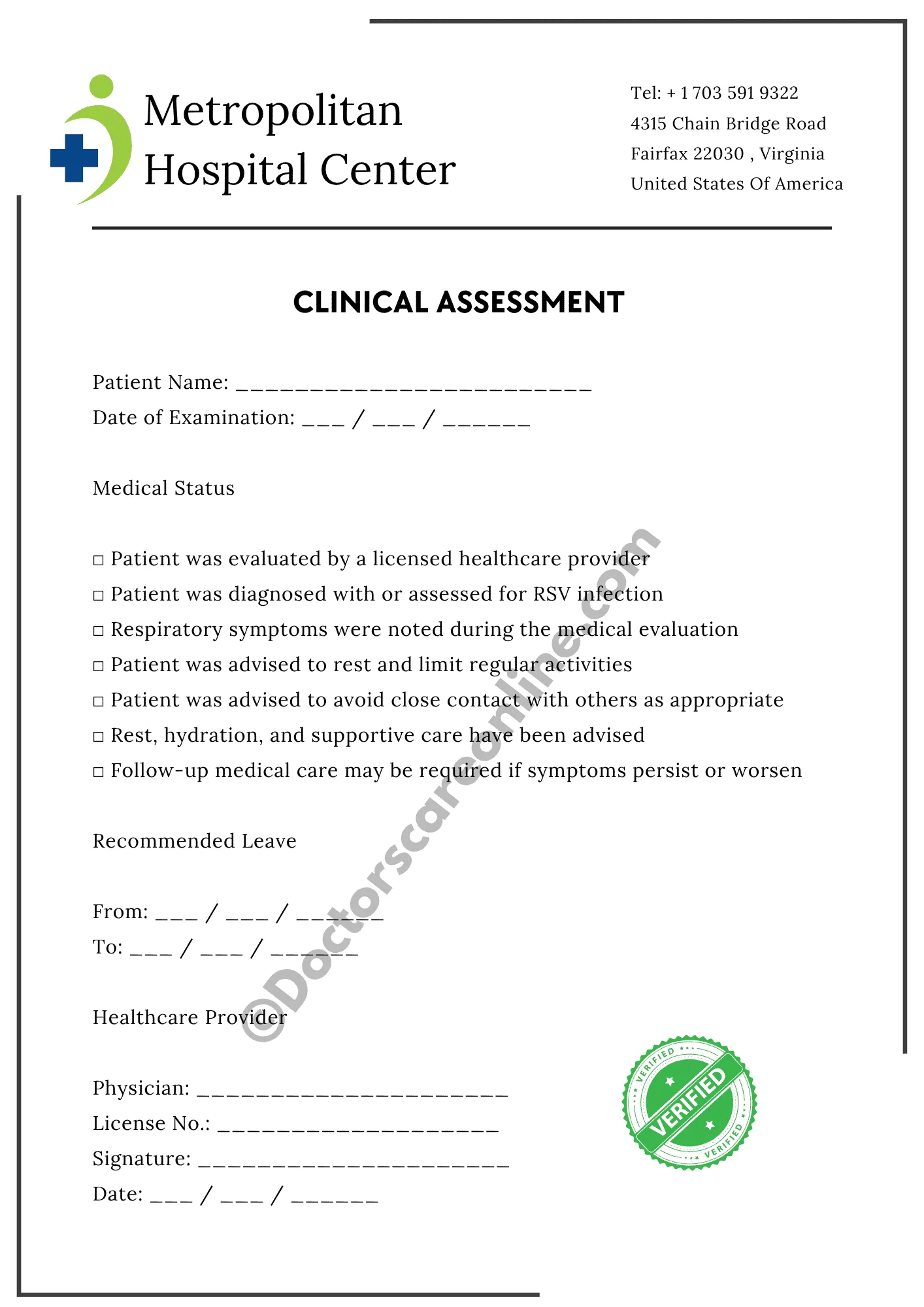
A doctor’s note for RSV is medical documentation provided by a licensed healthcare professional following an evaluation. Depending on the patient’s circumstances, it may confirm that the individual was medically assessed and may include recommendations concerning work, school, activities, or recovery.
The document may be useful when an employer, school, college, or other organization requires medical documentation for an absence or temporary restriction.
What Is a RSV?
Respiratory syncytial virus (RSV) is a common respiratory infection that can cause cold-like symptoms in children and adults. While many people recover with supportive care, RSV can sometimes lead to more serious respiratory illness, particularly in infants, some young children, older adults, and people with certain underlying health conditions.
If RSV symptoms are affecting your ability to work, attend school, care for others, or complete normal activities, an online doctor appointment may provide a convenient way to discuss your symptoms with a licensed healthcare professional. After an appropriate medical evaluation, the provider can determine whether rest, activity limitations, medical leave, or documentation is appropriate for your circumstances.
Related Doctor Note :——
You can also visit:
- Doctors Note for Asthma
- Doctors Note for Bronchitis
- Doctor’s Note for Work From Home
- Unlimited Doctor’s Notes for 1 Year
When a Doctor’s Note for RSV May Be Useful
RSV symptoms can interfere with responsibilities in different ways. Documentation may be relevant when an individual:
- Is unable to safely perform normal job responsibilities because of respiratory symptoms.
- Needs to remain away from work while recovering.
- Is unable to attend school or college.
- Needs temporary changes to normal activities.
- Requires documentation for an absence under an organization’s policy.
- Needs medical documentation following an evaluation.
- Has symptoms that make prolonged physical activity difficult.
- Needs additional time to recover before resuming normal responsibilities.
Whether a note is appropriate, and what it should say, is determined by the healthcare provider based on the patient’s individual situation.
RSV Symptoms That Can Affect Daily Activities
RSV symptoms can develop gradually rather than appearing all at once. Common symptoms include:
- Runny nose
- Nasal congestion
- Cough
- Sneezing
- Fever
- Wheezing
- Reduced appetite
- Fatigue or decreased activity
Very young infants can sometimes have less typical symptoms, including irritability, reduced activity, or breathing difficulties.
Symptoms can interfere with concentration, physical activity, sleep, work performance, school attendance, and other everyday responsibilities.
RSV and Work or School Absence
An RSV infection may make attending work or school difficult, particularly when symptoms include persistent coughing, fever, significant fatigue, or breathing-related discomfort.
A healthcare provider can assess whether the patient’s symptoms justify staying home or modifying normal activities. Documentation requirements vary between employers and educational institutions, so patients should check their organization’s policy before submitting medical documentation.
For respiratory illnesses generally, CDC guidance recommends staying home and away from others while symptoms are improving and until a person has been fever-free for at least 24 hours without using fever-reducing medication, followed by additional precautions when returning to normal activities.
Adults and Children: Why RSV Can Differ
RSV does not affect every age group in the same way. Healthy adults may experience a mild respiratory illness, while infants and certain older or medically vulnerable people have a greater risk of severe disease.
Adults with certain chronic heart or lung conditions or weakened immune systems may have a greater risk of complications. RSV can also worsen conditions such as asthma, COPD, or heart failure.
For children, particular attention should be given to breathing, hydration, alertness, and changes in activity level.
Who May Have a Higher Risk of Severe RSV
Although RSV can infect people of all ages, severe illness is more likely in certain groups.
Higher-risk groups include:
- Young infants
- Some young children
- Older adults
- People with chronic heart or lung disease
- People with weakened immune systems
- People with certain underlying medical conditions
- Older adults living in nursing homes
Risk depends on the individual’s age, health history, and other circumstances.
If you or your child belongs to a higher-risk group and develops respiratory symptoms, contacting a healthcare professional promptly can help determine whether additional medical assessment is needed.
How RSV Is Evaluated During a Medical Appointment
A healthcare professional may review the patient’s symptoms, medical history, age, risk factors, and current condition. Depending on the circumstances, the provider may also assess breathing-related symptoms and determine whether additional testing or an in-person examination is necessary.
RSV symptoms can resemble other respiratory infections, including the common cold, influenza, and COVID-19. Because symptoms alone may not always identify the specific virus, a healthcare professional can determine whether testing or further evaluation is appropriate.
A telehealth appointment may be suitable for some situations, but it is not appropriate for every respiratory complaint. The provider will determine whether the condition can be safely managed through an online consultation.
When an Online RSV Consultation May Help
An online medical appointment can be convenient when a patient wants to discuss respiratory symptoms without immediately traveling to a clinic.
During a virtual consultation, you may be able to discuss:
- When symptoms began
- Changes in symptoms over time
- Fever or coughing
- Breathing-related concerns
- Existing medical conditions
- Current medications
- Exposure to respiratory illness
- Work or school responsibilities
- Documentation requirements
The healthcare professional can then determine whether online care is appropriate and whether an in-person evaluation is necessary.
How to Book an Online Doctor Appointment for RSV
Booking an online consultation generally involves a few straightforward steps:
- Select an available healthcare provider offering telehealth appointments.
- Choose a suitable appointment time based on available scheduling options.
- Register or log in to your account if required.
- Provide the requested patient information accurately.
- Describe your RSV-related symptoms and explain how they are affecting your normal activities.
- Complete any required payment process before the consultation if applicable.
- Attend the online appointment at the scheduled time.
- Follow the provider’s medical recommendations after the evaluation.
If medical documentation is appropriate, the healthcare provider determines whether a doctor’s note can be issued based on the consultation and applicable requirements.
What to Have Ready Before Your Telehealth Appointment
Preparing relevant information can make your online medical consultation more productive.
Consider having the following available:
- Approximate date symptoms began
- Current symptoms and their severity
- Temperature readings, if available
- Current medications
- Existing medical conditions
- Recent exposure to someone with a respiratory infection
- Relevant medical records
- Employer or school documentation requirements
- Questions you want to ask the healthcare provider
If symptoms are affecting your ability to work, explain the specific activities you cannot comfortably or safely perform rather than simply stating that you feel unwell.
What a Doctor May Consider Before Providing Medical Documentation
A healthcare provider may consider several factors before determining whether medical documentation is appropriate, including:
- The patient’s reported symptoms
- Medical history
- Age and individual risk factors
- Functional limitations
- Severity or progression of illness
- Whether additional examination is necessary
- The patient’s work or school requirements
- Applicable professional and legal requirements
A doctor’s note is medical documentation, not a guaranteed product that can be issued solely because a patient requests one. The healthcare provider maintains clinical responsibility for deciding whether documentation is justified.
What May Appear on an RSV Medical Note
The exact format varies by healthcare provider and the purpose of the documentation. Depending on the circumstances, it may contain:
- Patient identification information
- Date of medical evaluation
- Confirmation of medical assessment
- Recommended absence period, when medically appropriate
- Activity or work limitations, when applicable
- Recommended return date, when clinically appropriate
- Follow-up recommendations
- Healthcare provider information
- Provider signature or electronic authentication
The amount of medical information disclosed should depend on what is appropriate and what the requesting organization requires.
Medical Privacy and RSV Documentation
Patients may have concerns about providing an employer or school with sensitive health information. A medical note can sometimes focus on functional limitations or an absence recommendation without unnecessarily disclosing detailed clinical information.
However, documentation requirements differ between organizations and situations. Before submitting a note, patients should review the applicable workplace, school, insurance, or institutional requirements.
Healthcare providers should document information accurately and appropriately based on the medical encounter.
How Our Online Doctor Appointment Service Can Help
Our online doctor appointment service is designed to make access to a healthcare consultation more convenient for people who prefer virtual care when appropriate.
Instead of relying on self-diagnosis or trying to determine independently whether medical documentation is appropriate, users can schedule an appointment and discuss their circumstances with a healthcare professional.
Our service can be useful for users who:
- Want to discuss RSV symptoms from home.
- Need guidance about whether an online consultation is appropriate.
- Need to explain how illness is affecting work or school.
- Want professional medical advice before requesting documentation.
- Prefer a convenient online appointment when telehealth is suitable.
Any medical documentation is dependent on the healthcare provider’s assessment and clinical judgment.
Why Patients Can Use Our Service With Confidence
Trust is particularly important when an online service involves healthcare information and medical documentation.
Our appointment-based process is designed around a healthcare evaluation rather than simply providing documentation on request. Users provide relevant information, communicate with a healthcare professional, and receive recommendations based on their individual circumstances.
Important points for users include:
- Provider evaluation: Medical documentation is considered only after an appropriate healthcare assessment.
- Convenient access: Users can request an online appointment without necessarily traveling to a physical location when telehealth is appropriate.
- Clear process: The appointment, patient-information, and payment steps are presented as part of the online service process.
- Privacy-conscious handling: Users should provide only accurate information relevant to their healthcare consultation.
- Professional judgment: The healthcare provider decides whether treatment recommendations or medical documentation are appropriate.
- User support: Questions about using the website can be directed to our support team through the website chatbox.
Users should always provide truthful and complete information during a medical consultation. A healthcare provider may recommend an in-person visit or additional evaluation when an online assessment is not sufficient.
Need Help With Registration, Login, or Payment?
If you experience an issue while using our website, you do not have to figure it out alone.
For questions or problems involving:
- Account registration
- Login or account access
- Appointment booking
- Payment or checkout
- Order-related questions
- Website navigation
- General service questions
you can contact our support team through the website chatbox. Our support team can help with website-related questions and guide you through the appropriate next step.
For medical questions, symptoms, diagnosis, treatment, or whether a doctor’s note is clinically appropriate, please discuss the matter directly with the healthcare provider during your medical consultation.
What to Do If RSV Symptoms Are Getting Worse
Most RSV infections are mild, but some people develop more serious respiratory illness. CDC advises seeking medical care when there is difficulty breathing, inadequate fluid intake, or worsening symptoms.
For adults, concerning symptoms can include difficulty breathing, chest pain or pressure, sudden dizziness or confusion, difficulty eating or drinking, or worsening illness.
For children, urgent concerns can include trouble breathing, fast breathing, bluish lips or face, ribs pulling inward with breathing, dehydration, unusual lack of alertness, or worsening symptoms.
If someone is experiencing a medical emergency, seek emergency medical care rather than waiting for an online appointment.
Supporting Recovery While Sick With RSV
Care for RSV is generally focused on managing symptoms and supporting recovery. CDC notes that most RSV infections resolve on their own, while some people may require medical attention because of more severe illness or complications.
Depending on individual circumstances, a healthcare professional may discuss:
- Adequate fluid intake
- Rest
- Fever or pain management
- Appropriate over-the-counter medicines
- Monitoring symptoms
- Follow-up care when necessary
Medication choices can vary based on age, medical history, other medicines, and health conditions. Children should not be given medications intended for adults unless specifically directed by a healthcare professional.
Preventing the Spread of RSV
Respiratory viruses can spread between people, so reducing exposure can help protect household members and other people in the community.
CDC recommends core respiratory-virus prevention measures such as staying up to date with recommended immunizations, practicing good hygiene, improving indoor air quality where possible, and staying home and away from others when sick.
People who live with or regularly interact with infants, older adults, or others at increased risk should take particular care when experiencing respiratory symptoms.
RSV Immunization and Prevention
RSV prevention has changed as immunization options have become available. For adults, CDC currently recommends a single RSV vaccine dose for everyone age 75 and older and for adults ages 50–74 who have increased risk of severe RSV illness.
There are also immunization options intended to protect infants and certain young children from severe RSV disease. These include maternal vaccination during pregnancy and certain long-acting antibody products for eligible infants and young children.
Vaccination and immunization decisions should be discussed with a qualified healthcare professional based on age, medical history, pregnancy status, risk factors, and current recommendations.
Frequently Asked Questions
1. Can RSV symptoms look like a common cold?
Yes. RSV commonly produces cold-like respiratory symptoms, and symptoms can overlap with infections such as influenza or COVID-19. A healthcare professional can determine whether further assessment or testing is appropriate.
2. Can an RSV doctor’s note be used for both work and school?
The same medical documentation may not automatically satisfy every organization’s requirements. Employers, schools, and colleges can have different rules regarding acceptable documentation, so patients should confirm what information they need before submitting a note.
3. Can I request an RSV doctor’s note before speaking with a doctor?
You can request an appointment and explain that you need medical documentation, but the healthcare provider must first determine whether a note is medically appropriate. Documentation should reflect the actual medical evaluation rather than being issued solely on request.
4. Can an online doctor tell whether I have RSV without a test?
Not necessarily. RSV symptoms can overlap with several other respiratory infections, and a healthcare provider may determine that testing or an in-person examination is needed. Whether testing is appropriate depends on the patient’s symptoms and circumstances.
5. Does RSV always require staying home from work?
Not necessarily. The appropriate course depends on symptoms, recovery, individual health factors, and the nature of the person’s work. A healthcare professional can provide individualized guidance about activity and work restrictions.
Medical Disclaimer: This content is provided for general educational and informational purposes only and does not replace professional medical advice, diagnosis, or treatment. RSV can cause mild illness in many people but may lead to serious disease in infants, certain young children, older adults, and people with specific health conditions.
A doctor’s note should only be issued by a licensed healthcare professional following an appropriate medical evaluation. Medical documentation, telehealth availability, treatment recommendations, work or school restrictions, and leave requirements can vary according to individual circumstances, employer or school policies, professional standards, and applicable laws.

Reviews
There are no reviews yet.